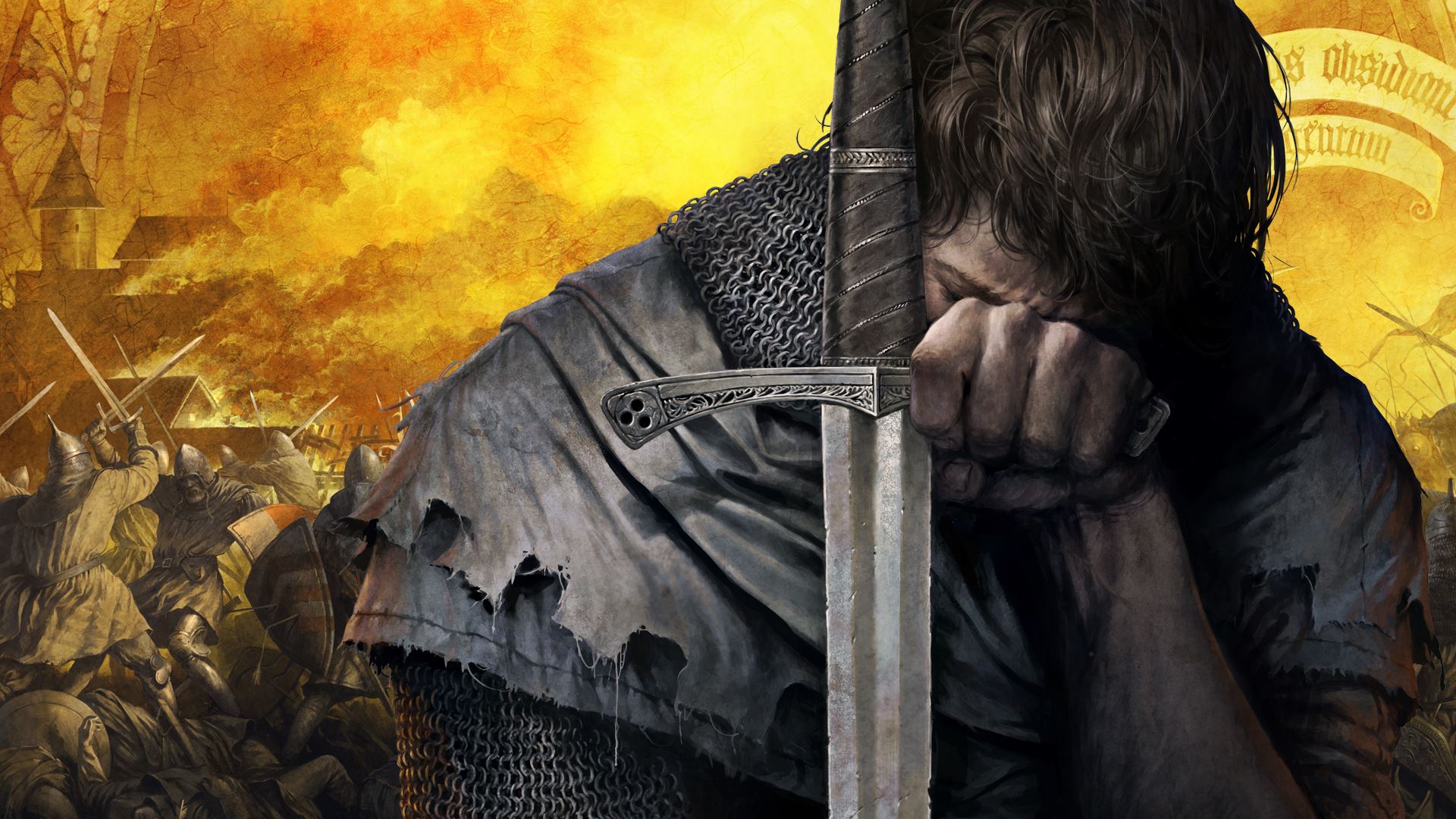
In an era where most role-playing games are filled with fire-breathing dragons, ancient prophecies, and enchanted blades, Kingdom Come: Deliverance arrives as a sharp, steel-edged “punch in the teeth” to the genre’s traditional tropes. Developed by Warhorse Studios, this title boldly rejects the typical power fantasy in favor of what they call a “Medieval Simulator”. There are no mages or goblins here; instead, you are thrust into the rigid social hierarchies and harsh physical realities of 14th-century Bohemia. It is a game that values historical authenticity above all else, offering an experience that is as demanding as it is rewarding.
The Tale of an Unassuming Hero
The story is set in the Kingdom of Bohemia in 1403, a time of immense political turmoil and bloody war. You step into the worn boots of Henry, a humble blacksmith’s son who leads a simple, peaceful life in the village of Skalitz. This tranquility is shattered when a mysterious army raids the town, murdering Henry’s parents and leaving him with nothing but a burning desire for vengeance.
Your journey begins with a desperate quest to recover a masterwork sword forged by Henry’s father for the local lord, Sir Radzig Pantyla. While the game takes a slight “poetic license” by allowing a peasant like Henry to enter the inner circles of the nobility, the writing remains grounded and convincing. As Henry, you aren’t a “chosen one”; you are a fragile, unlettered survivor who must navigate a world that is often indifferent—or outright hostile—to your existence.
Mastery Through Realism: Gameplay Mechanics
The most striking aspect of the game is its “learning by doing” progression system. Much like the classic Oblivion, your skills only improve through actual practice. If you want to become better at archery, you must spend time at the range; if you wish to negotiate with merchants, you must hone your speech skill in conversation. You can even undertake quests specifically to learn how to read, a major character milestone that highlights the game’s commitment to the period’s reality.
Melee combat is a heavy, visceral affair that utilizes a unique first-person directional system. You can swing your weapon from five different angles, turning every duel into a high-stakes game of feints, parries, and timing. However, because Henry starts as a complete novice, early fights are terrifyingly difficult—even the town drunk can pose a threat. Survival also requires constant management of your physical state: Henry must eat to avoid inedia (starvation), sleep to stay alert, and maintain hygiene to remain presentable.
A Living, Reactive World
The world of Kingdom Come: Deliverance feels truly lived-in. The environment—a lush landscape of deep forests, rolling hills, and modest towns—is stunningly detailed and moves according to its own internal logic. NPCs follow strict daily routines, opening shops at dawn and heading to the tavern at dusk.
This simulation extends to how the world perceives you. The reputation system is highly reactive; if you are covered in the mud and blood of battle, a noble might refuse to speak with you, whereas a high reputation in a town will lead citizens to cheer your name in the streets. Even your equipment has trade-offs: wearing a full-face plate helmet provides incredible protection but realistically restricts your field of vision and consumes more stamina.
Organic Exploration
One of the most refreshing features is the lack of excessive map markers. The game trusts your intelligence, often giving you a general area to search or vague directions rather than a precise GPS-style waypoint. This encourages organic exploration and makes the act of finding a hidden bandit camp feel like a genuine accomplishment.
Adventure and Longevity
The game is massive in scope. A standard run of the main story combined with a few side activities will likely take around 40 hours, but a more comprehensive playthrough easily reaches 70 hours. For those who truly wish to lose themselves in the Bohemian countryside, completing everything can take well over 100 hours.
The variety of content ensures the experience rarely feels dry. You might find yourself participating in a massive castle siege one day and acting as a “medieval detective” the next, solving crimes in a local monastery. Whether you are hunting in the woods or navigating complex political intrigue, the game constantly finds new ways to use its realistic systems.
What Makes the Game Unique?
What truly sets this game apart is its “scrappy ambition”. Created by an independent team, it possesses a level of depth and systemic complexity that few big-budget titles dare to attempt. While this can lead to technical “jank”—such as performance stutters in crowded towns or the occasional visual bug—there is an undeniable charm to its imperfections.
The save system is another unique, albeit polarizing, feature. Aside from autosaves at key moments, you can only save by sleeping in a bed or drinking a rare, expensive alcoholic beverage called Saviour Schnapps. This adds a layer of tension to every decision, as you cannot simply “save-scum” your way out of a bad choice.
Conclusion
Kingdom Come: Deliverance is a rare gem in the RPG landscape. It is a game that respects the player’s time and intelligence, demanding patience and effort while offering unparalleled immersion in return. It isn’t always polished, and it certainly isn’t easy, but it is one of the most satisfying and authentic historical experiences ever put to disc. If you are looking for a world where your actions matter and the clank of your armor feels real, Henry’s journey is one you cannot afford to miss.
——————————————————————————–
Frequently Asked Questions
How long does it take to finish Kingdom Come: Deliverance?
A comprehensive playthrough of the game takes nearly 70 hours. This time allows you to experience the full journey of the protagonist, Henry, as he transforms from an unskilled peasant into a formidable warrior through extensive training and a deep mastery of the game’s systems.
Is Kingdom Come: Deliverance as hard as Dark Souls?
While the challenge is different from the “Souls” series, the game features a significant learning curve rooted in brutal realism. In the beginning, you are so weak that even the town drunk can beat you in a fight. The difficulty comes from a commitment to historical accuracy; success isn’t just about boosting your stats but about your actual ability to handle technical melee combat, manage survival needs like hunger, and even learn basic skills like reading, which is treated as a major character milestone.
How do I save my progress in Kingdom Come: Deliverance?
Saving is limited and intentional. You can save your game by sleeping in a bed (at an inn or a brothel) or by drinking a rare and expensive alcoholic beverage called Saviour Schnapps. Because autosaves are infrequent, managing your saves is a core part of the challenge.
Does my character’s appearance affect the story?
Yes, realism is a core mechanic. NPCs will judge you based on your cleanliness and clothing. If you are covered in mud or blood, nobles will be unimpressed and commoners may be intimidated. You will need to visit bathhouses or use water troughs to keep your reputation high.
Is there magic in Kingdom Come: Deliverance?
No. The game is a historically accurate recreation of medieval Bohemia. There are no spells, monsters, or enchanted swords. The focus is entirely on realistic combat, political intrigue, and period-accurate daily life.
How does the combat system work?
The game features a first-person melee system that is kinetic and precise. It rewards technical skill, timing, and patience. You must manage your stamina and account for realistic gear trade-offs; for example, wearing a full-face helmet offers better protection but significantly restricts your field of vision.
Is Kingdom Come: Deliverance an open-world game?
Yes, it features a large, detailed map of medieval Bohemia with no loading screens between areas. The world is built with strong internal logic, featuring realistic farms, towns, and forests that feel like a real historical place rather than a typical fantasy map.
What are the technical requirements for the game?
The game is highly detailed but can be demanding on hardware. To enjoy the best textures and scenery, a powerful PC system is recommended, as the game features complex lighting and dense environments that may require lower settings on mid-range hardware to maintain a stable framerate.